
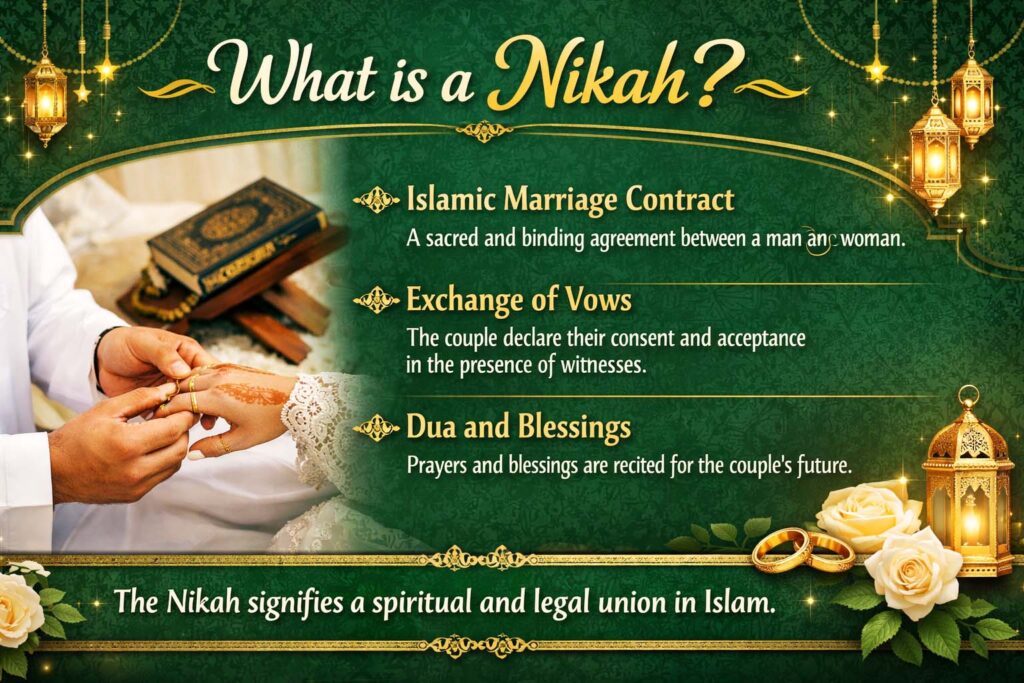
Marriage in Islam is both spiritually and socially significant. Nikah is the sacred contract that binds a man and a woman in a lawful partnership. Understanding this ceremony helps everyone appreciate Islamic marital traditions.
The Meaning of Nikkah in Islam
The Arabic word nikkah means “marriage contract.” In Islamic law, it is a formal agreement between a man and a woman, made before witnesses, establishing their rights and responsibilities.
Nikkah is a spiritual covenant based on mutual respect, consent, and love.
Conditions of a Valid Nikkah
Islamic teachings specify essential conditions for a valid nikkah:
- Mutual Consent: Both bride and groom must willingly agree to the marriage without any compulsion.
- Offer and Acceptance (Ijab and Qubool): The proposal and acceptance are declared in clear terms during the ceremony.
- Witnesses: At least two adult Muslim witnesses must be present.
- Mahr (Dowry): The groom offers a gift, called mahr, to the bride as part of the contract.
- Guardian (Wali): In many Islamic schools of thought, the presence of a bride’s guardian is required.
These conditions make the marriage transparent, fair, and understood by both.
How the Nikkah Ceremony Takes Place
A typical nikkah ceremony can be held in a mosque, a home, or another appropriate setting. The imam or qazi (Islamic scholar) usually officiates the ceremony, reciting verses from the Quran emphasizing the obligations of marriage.
After the nikkah is validated, prayers are said, and families may celebrate together.
The Importance of Nikkah in Muslim Life
The nikkah holds deep moral, legal, and emotional value:
- It allows a man and a woman to live together as husband and wife under Islamic law.
- It strengthens family and community bonds through lawful relations.
- It protects the rights of both partners and future children.
- It encourages love, patience, and cooperation between spouses as acts of worship.
For Muslims, marriage is half of faith — a way to achieve purity, companionship, and a stable family life.
Modern Perspective on Online and Civil Nikkah
Many now choose online or registered nikkahs, which retain religious requirements while offering convenience, especially abroad. Ensuring proper witnesses and documentation remain vital.